
Do You Need Planning Permission or a Special Base for a Hot Tub? UK Guide
By Matt · Updated 28 November 2026
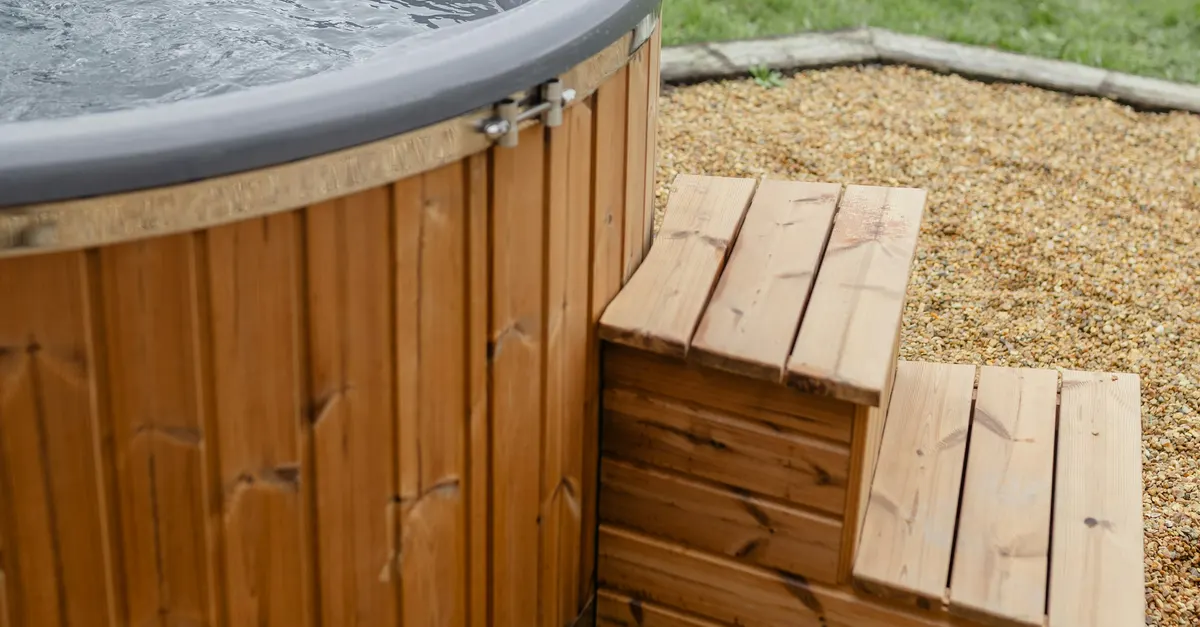
Quick answer
Usually not. A portable or inflatable hot tub on a patio doesn't need planning permission in most UK gardens. You may need it for raised decking over 30cm high, a permanent building or enclosure around the tub, a listed building, or a home with restricted permitted development rights. Every hot tub needs a flat, level base that can take over a tonne, such as paving slabs or a concrete pad, and an outdoor supply protected by an RCD. Plumbed-in hard shells need their own circuit, installed by a registered electrician.
- Time
- A weekend for a slab base
- Difficulty
- Moderate
- When
- Winter, Spring
Before a hot tub arrives, three things need sorting: whether you need permission, what it will sit on, and how it will be powered. The first is usually a no. The other two matter on every single hot tub, and getting them wrong can damage the tub, the garden or, with the electrics, something much worse.
The planning rules below cover England; Wales, Scotland and Northern Ireland have their own versions, broadly similar. This isn’t legal advice, so check with your council if anything about your home is unusual.
Do you need planning permission for a hot tub?
Usually not. A portable or inflatable hot tub sitting on a patio is treated much like garden furniture, and a hard shell on a ground-level base is normally fine too. You’re more likely to need permission if:
- You build a raised deck for it. Decking or a platform more than 30cm above the ground needs planning permission.
- You put it in a building. A gazebo you can take down is fine, but a permanent enclosure or garden room around the tub has to meet the outbuilding rules: single storey, not in front of the house, no more than 2.5m tall within 2m of a boundary, and so on. Our garden room planning guide covers them.
- Your home is listed, or you live in a flat.
- Your permitted development rights have been removed, which happens on some newer estates and under Article 4 directions.
Noise can also cause problems even when planning doesn’t. A pump running at night next to a neighbour’s bedroom window is the most common cause of complaints, so think about where it goes.
How heavy is a hot tub?
Heavier than most people expect. Water weighs 1kg per litre, so:
| Tub | Water | Plus four adults | Roughly |
|---|---|---|---|
| 4 to 6 person inflatable | 800 litres | about 300kg | 1.1 tonnes |
| 7 person inflatable | 1,150 litres | about 300kg | 1.5 tonnes |
| 5 seat hard shell | 1,300 litres plus 250kg+ shell | about 300kg | 1.9 tonnes |
All that weight sits on a small area, which is why the base matters so much.
What base does a hot tub need?
It needs to be flat, level, solid and slightly bigger than the tub.
- Paving slabs on a compacted sub-base: the most common choice, and good for inflatables and most plug-and-play hard shells. Lay them on MOT Type 1 hardcore and a sand and cement bed, not just on soil.
- A concrete pad: the best base for large hard shells. Usually 100mm to 150mm thick on hardcore. Many hard shell makers specify concrete in their warranty terms, so check before you build.
- Decking: fine if it’s built for the load, with closely spaced joists and extra support underneath where the tub will sit. Most ordinary garden decking isn’t, so get it checked.
- Plastic grid bases filled with gravel: can work for inflatables if laid on a properly compacted, level sub-base.
- Grass or loose gravel on its own: not suitable. The ground sinks unevenly, the tub tilts and the seams or shell can be damaged, and most warranties won’t cover it.
Put a floor protector mat between an inflatable and the base. It stops grit wearing through the liner and adds a layer of insulation, which helps with running costs.
Power: what’s safe
Water and electricity outdoors need care, and this is the one part to leave to a professional.
- Plug-in inflatables and plug-and-play hard shells run from a standard 13 amp socket. It should be a weatherproof outdoor socket protected by an RCD (residual current device), installed by a qualified electrician if you don’t already have one. Inflatable tubs usually have an RCD built into the plug as well; never cut it off.
- Never use an extension lead. Hot tub makers say this clearly, and it’s a real fire and shock risk with a load running for hours.
- Plumbed-in hard shells usually need their own 32 amp (sometimes 40 amp) circuit from the consumer unit, with an isolator switch near the tub. In England and Wales this is notifiable work under Part P, so it must be done by a registered electrician who gives you a certificate.
- Keep the plug and socket out of the splash zone. Follow the distances in the tub’s manual.
Choosing where to put it
- Close enough to the house to walk to in winter, and to reach the socket without an extension lead.
- Out of the wind, which cuts running costs.
- Away from trees that drop leaves and sap into the water.
- Somewhere with a bit of privacy from neighbours’ windows.
- With access to a drain or a soakaway for when you empty it, and a hose tap nearby for refilling.
If you’re still choosing a tub, our guide to the best inflatable hot tubs gives each one’s full width with the pump attached, so you can plan the base to fit.
FAQs
Can you put a hot tub on grass?
Not on its own. The weight will sink unevenly into the lawn, the tub will tilt, and the grass underneath will die. Lay a proper base first.
Can you put an inflatable hot tub on decking?
Only if the deck is built to take over a tonne on a small area. Many standard garden decks aren’t. If in doubt, add extra joists and supports under where the tub will sit, or ask a builder to check it.
Do I need to tell my home insurer about a hot tub?
It’s a good idea. Some policies have rules about outdoor electrics or limit cover for garden equipment, and a quick call avoids problems if you ever need to claim.
Sources
Disclosure: Some links on this site may be affiliate links. If you buy through them, we may earn a commission at no extra cost to you. Our guides are written to help you choose suitable products, not just promote the highest-paying options.